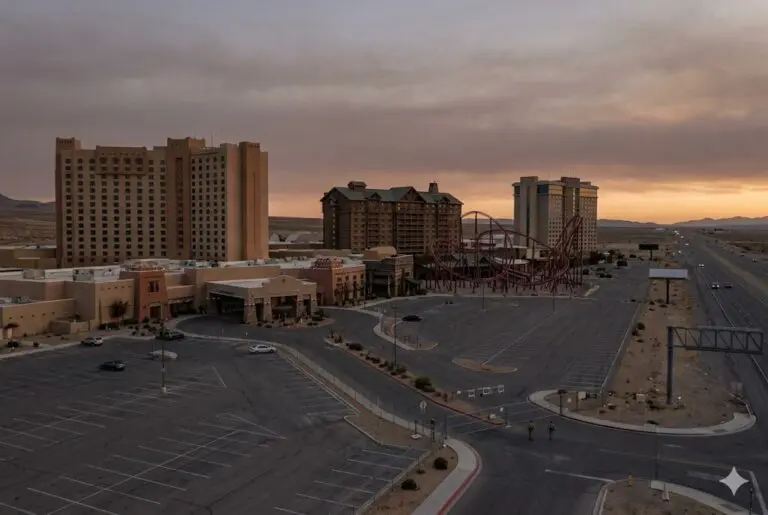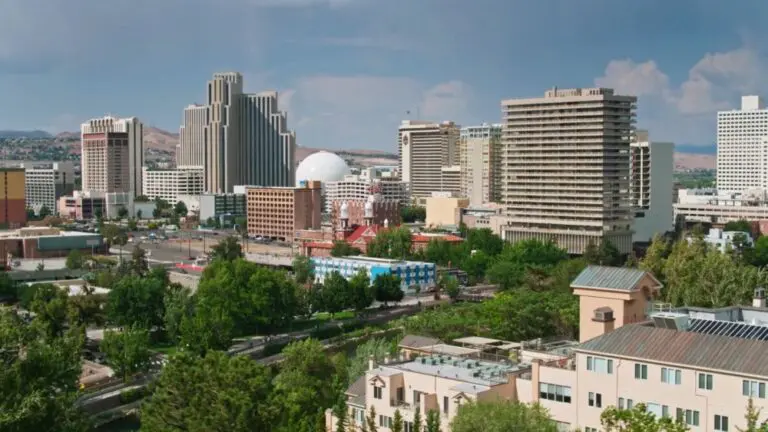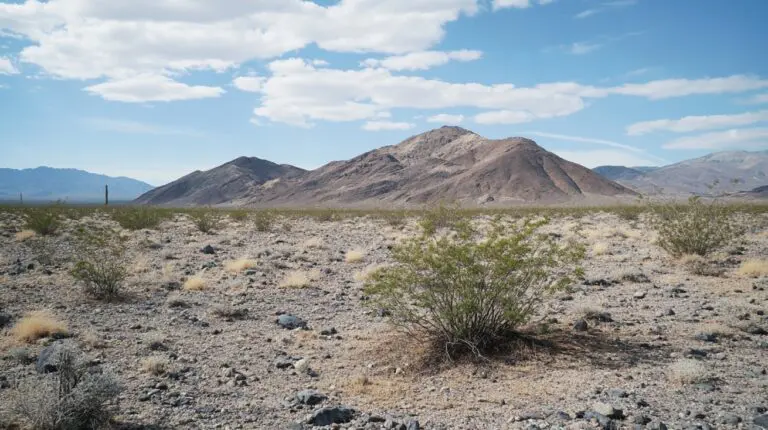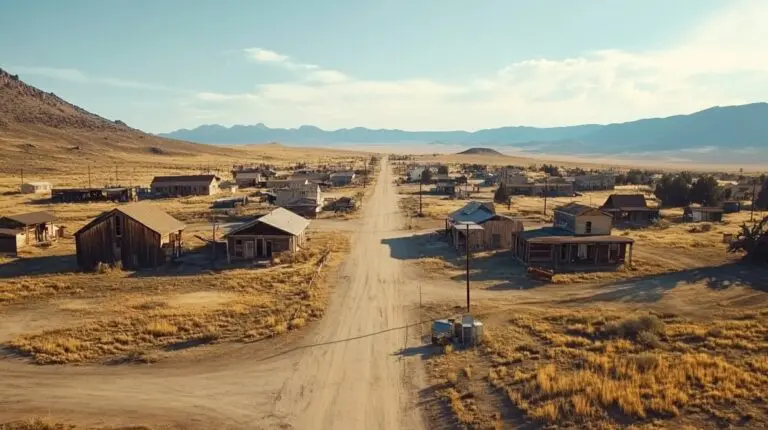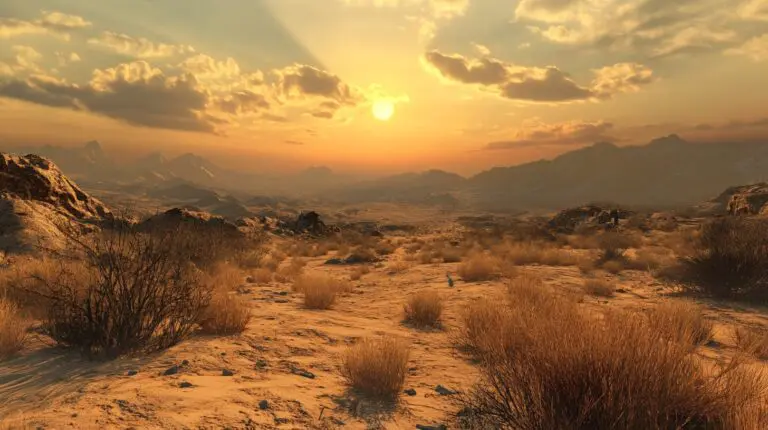
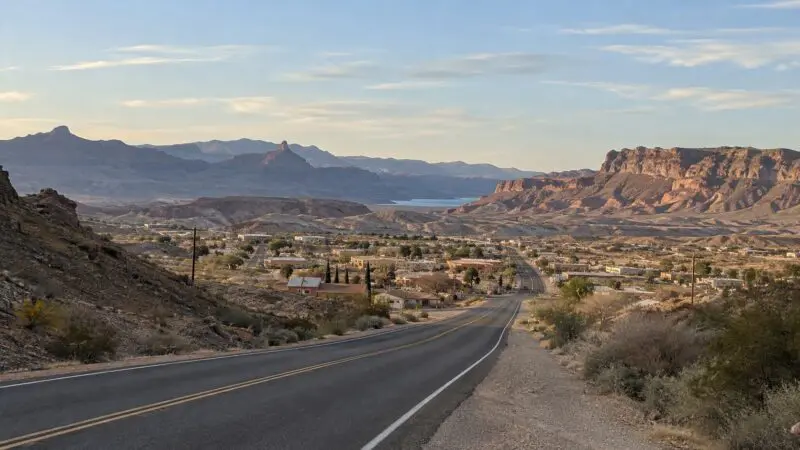

A road trip across the American Southwest changes character mile by mile. Open Texas plains give way to sand dunes, mountain ranges, white gypsum fields, red-rock formations, old mining communities, and eventually the Mojave Desert surrounding Las Vegas.
Small towns along the route can become some of its most memorable stops.
Hiking trails, stargazing, roadside photography, regional food, historic downtown districts, and nearby parks give travelers plenty of reasons to spend a night instead of simply continuing down the highway.
Exact routing depends on the starting point in Texas, and several stops require detours.
Travelers with extra time can build a slower itinerary around these seven towns and see far more of the Southwest along the way.
1. Monahans, Texas – Start With a Sea of West Texas Sand
View this post on Instagram
Monahans offers an early introduction to the desert terrain waiting farther west.
Located in West Texas, it is best known for Monahans Sandhills State Park, where rolling dunes stretch across an environment that can feel surprisingly remote despite being easily accessible by road.
Walking directly across the dunes is one of the simplest ways to experience the park.
No fixed trail is needed across much of the sandy terrain, allowing visitors to wander between ridges and look for elevated viewpoints.
Sand sledding adds another reason to stop. Visitors can rent sand disks and ride down steeper dune faces, turning a relatively short park visit into something more active.
Late afternoon is often a better time to visit during hotter months. Sand can become extremely hot around midday, while lower evening temperatures make walking more comfortable.
- Photograph dune ridges during golden hour when shadows become more pronounced.
- Stay after sunset for stargazing under comparatively dark skies.
- Try sand sledding before temperatures drop too far after dark.
Monahans works especially well as a short road-trip stop. A few hours can be enough for walking, sand sledding, sunset photography, and a break before heading farther into West Texas.
2. Van Horn, Texas – Highway History Surrounded by Mountains
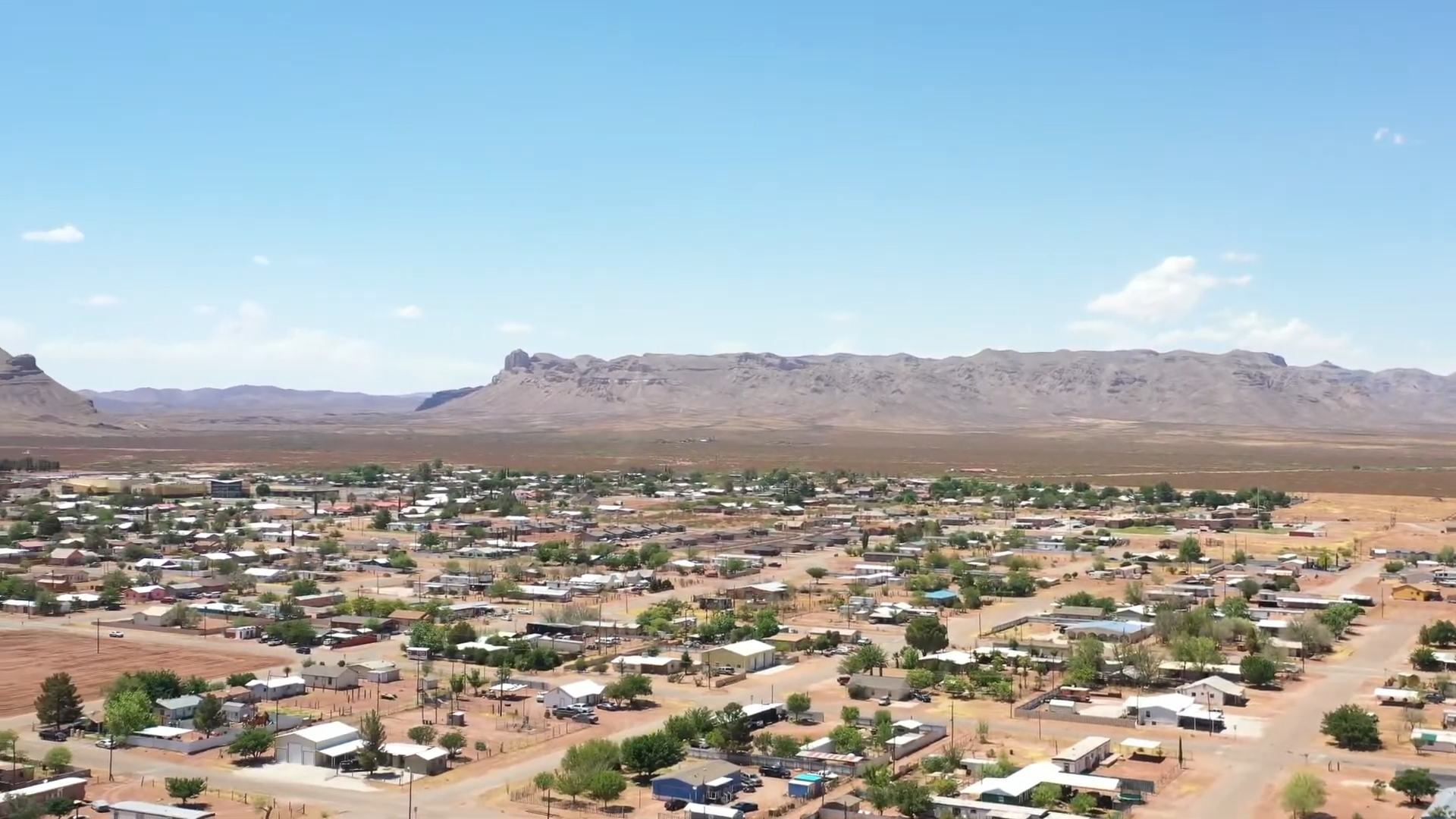
Van Horn feels like classic West Texas road-trip country.
Long highways, old roadside motels, broad skies, and distant mountain silhouettes create a setting closely associated with cross-country travel.
Small-town scale makes Van Horn practical for an overnight stop. Travelers can eat, refuel, rest, and prepare for longer stretches of highway without adding a complicated detour. Those who need an accessible vehicle for the trip can also look into Texas wheelchair vans for rent before continuing west.
Mountain scenery becomes increasingly noticeable around town, especially near sunrise and sunset. Low-angle light can give surrounding ridges stronger definition, making roadside photography particularly rewarding.
A longer itinerary can include a detour toward Guadalupe Mountains National Park.
Guadalupe Mountains works better for travelers willing to leave the vehicle and spend time hiking. Visitors hoping to experience a park mainly through roadside overlooks may find other stops easier to fit into a tight schedule.
Fuel planning becomes especially important west of Van Horn. Filling the tank before tackling longer and more isolated highway sections can make the next portion of the trip less stressful.
3. Alamogordo, New Mexico – White Sands and High-Desert Scenery
White Sands National Park sits nearby, giving travelers access to brilliant gypsum dunes that look completely different compared with the tan, red, and brown desert terrain found elsewhere across the Southwest.
White Sands is the main reason many road trippers stop here.
Large dune fields create excellent conditions for walking, photography, picnicking, and watching changing light across the basin.
Sunset can be especially striking. Bright gypsum takes on softer pink, gold, and blue tones as daylight fades, while surrounding mountains create a darker frame around the basin.
- Drive into the dune field and stop at designated pullouts.
- Walk a short section across the gypsum for close-up photography.
- Stay through sunset to see the color of the dunes change.
- Return to Alamogordo for dinner featuring regional New Mexican food.
Nearby mountains create another contrast. Travelers can move between hot desert terrain and higher elevations within a relatively short distance, making Alamogordo a useful base for a varied day outdoors.
One night is enough for many itineraries, although travelers interested in longer hikes or additional regional stops may prefer extra time.
4. Silver City, New Mexico – Art, History, and Mountain-Desert Roads
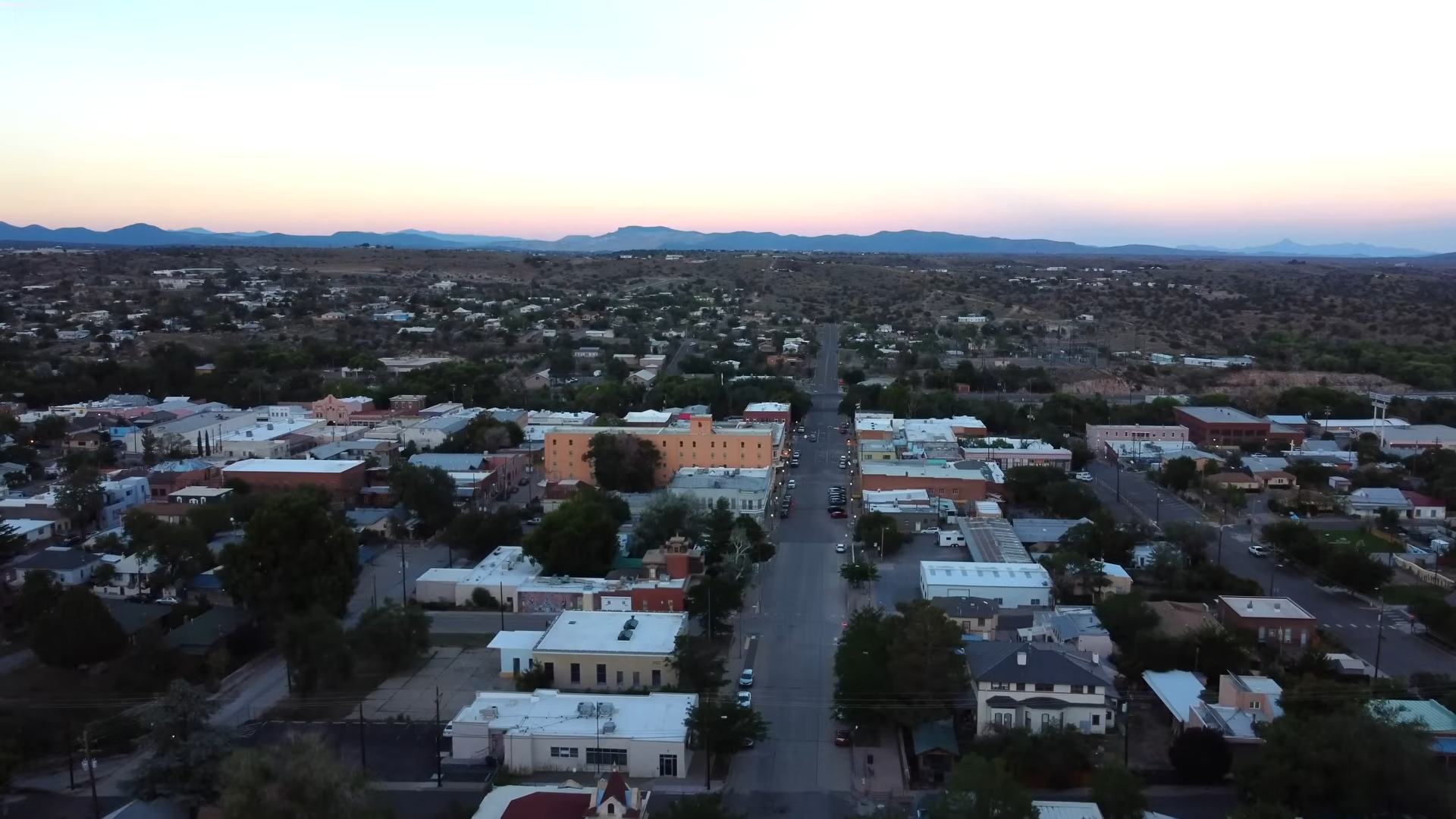
Silver City adds a cultural break between outdoor-heavy portions of the trip. Historic buildings, galleries, cafés, independent shops, and restaurants create a walkable town center that feels different compared with roadside communities built mainly around interstate traffic.
Mining history played a major role in shaping the area.
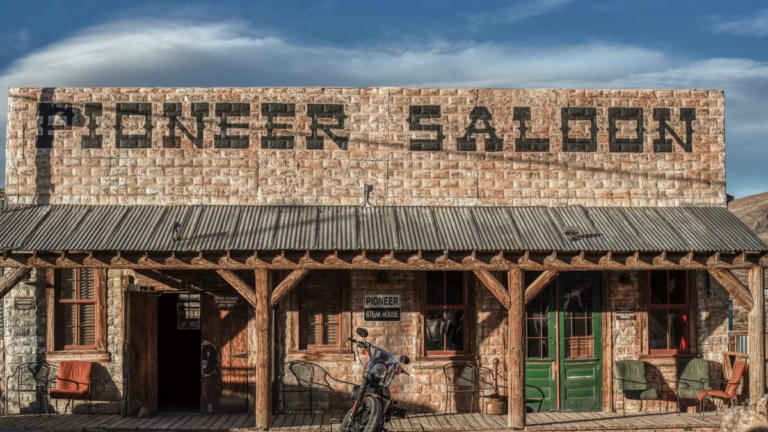
Old West architecture and preserved downtown streets give visitors a chance to see another side of Southwestern history alongside the surrounding desert terrain.
Art also has a visible presence around town. Galleries and locally owned businesses make Silver City a good stop for travelers who want several hours away from hiking trails and long highway stretches.
An overnight visit can help break up the drive through New Mexico. Dinner downtown followed by a slower morning offers a change of pace before continuing toward Arizona.
5. Bisbee, Arizona – Mining History in Colorful Desert Hills
Bisbee introduces Arizona with steep streets, hillside buildings, mining history, and an artistic personality that feels very different compared with many highway stops.
Copper mining shaped much of the town’s early growth.
Historic buildings and industrial remnants still point to that past, while newer galleries, cafés, small shops, and restaurants occupy spaces throughout the older districts.
Walking can be an attraction in itself. Streets climb sharply through the hills, and long staircases connect different sections of town.
Colorful homes climbing across surrounding slopes make Bisbee particularly photogenic. Elevated streets can provide broad views across rooftops and surrounding dry mountain terrain.
Nearby desert roads also create opportunities for additional stops before heading north through Arizona. Spending one night here works well for travelers seeking history and culture alongside outdoor scenery.
6. Sedona, Arizona – Red Rocks Worth Extra Mileage
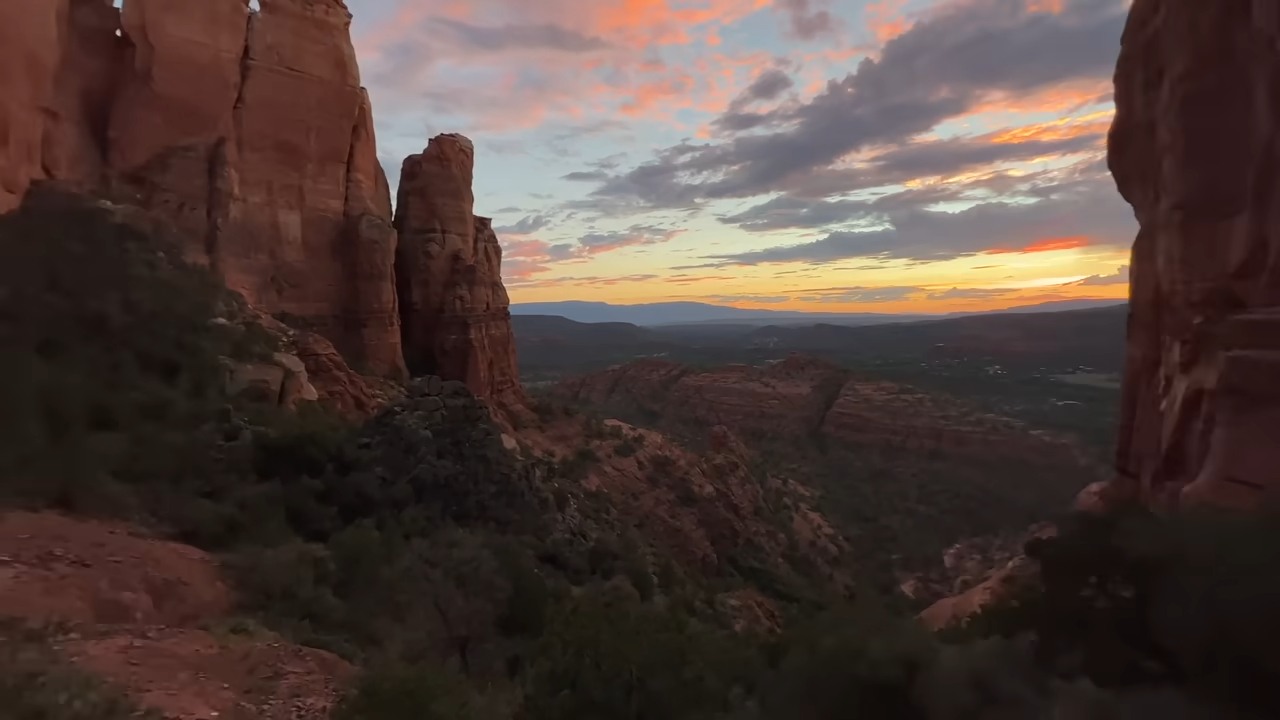
Sedona can require a substantial detour depending on the chosen route, but red-rock canyons, towering buttes, scenic roads, and extensive hiking options make it one of the strongest candidates for an added day.
Rock formations surround much of the town, meaning impressive views appear even during everyday drives between hotels, restaurants, and trailheads.
Scenic drives suit travelers who do not want to spend hours hiking. Several roads provide close views of cliffs, mesas, and sculpted rock formations without requiring demanding physical activity.
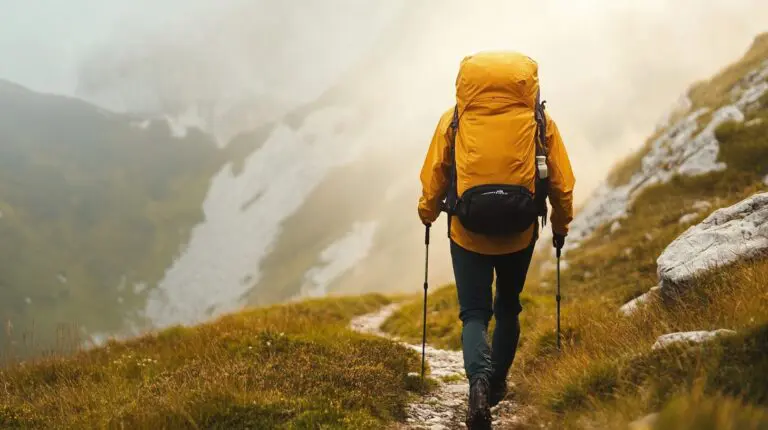
Hikers have far more options. Short trails can provide quick access to viewpoints, while longer routes lead farther into canyons and higher onto exposed ridges.
- Start early to improve parking chances at popular trailheads.
- Carry more water than expected during hot weather.
- Leave extra time for traffic around busy central areas.
- Plan sunrise or sunset stops separately rather than squeezing them between hikes.
Restaurants, galleries, hotels, and vacation rentals also make Sedona easy to use as an overnight base.
Travelers mainly interested in hiking should consider allowing at least one complete day instead of arriving late and leaving early the next morning.
7. Boulder City, Nevada – One Last Quiet Stop Before Las Vegas
View this post on Instagram
Boulder City provides a quieter final stop before the lights and traffic of Las Vegas. Historic streets, low-rise buildings, local restaurants, and access to major outdoor sites give travelers a chance to slow down before ending the trip.
Hoover Dam sits nearby and is often the biggest reason for visiting. Travelers can combine views of the dam with stops around Lake Mead and the Colorado River corridor.
Lake Mead National Recreation Area opens access to desert roads, viewpoints, shorelines, and hiking opportunities. Water surrounded by dry mountains creates another major change in scenery after days of sand, rock, and high desert.
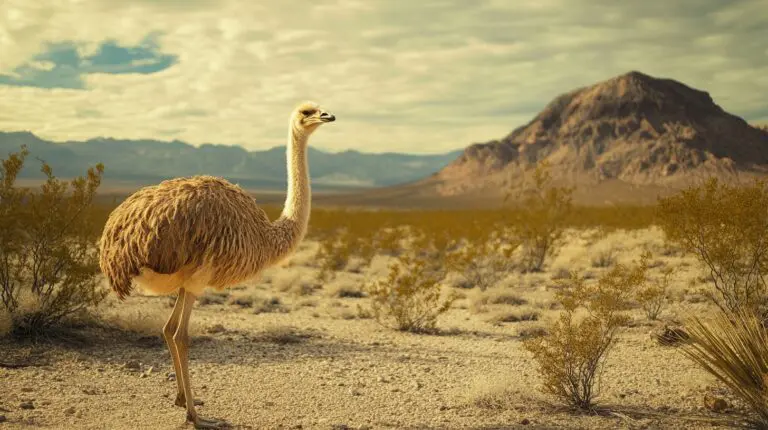
The surrounding Mojave Desert is also home to fascinating desert animals that have adapted to survive in one of the harshest environments in the American Southwest.
Black Canyon adds a more active option. Kayaking trips along the Colorado River can take visitors beneath steep canyon walls and toward springs, beaches, and small caves.
A final night here can create a noticeable contrast with Las Vegas. Quiet streets and desert views set up a dramatic transition before neon signs, casino resorts, and dense Strip traffic take over the next day.
Closing Thoughts
Las Vegas may be the endpoint, but treating every mile before it as simple transit misses much of what makes this route worth taking.
Slowing down changes the experience. Spending nights in smaller communities creates time for sunset walks, local meals, historic streets, hikes, desert photography, and dark-sky stops that would disappear on a rushed interstate drive.
Las Vegas can still provide a dramatic finale. After several days of quiet highways, empty desert, mountain horizons, and small-town evenings, its neon skyline feels even more intense.